On Oct 13, 2026, I pulled Google's US results for "hvac seo". All nine organic results were agencies or vendors selling HVAC marketing. This guide doesn't pitch until the last line.
HVAC search has a calendar. Searches for AC repair and furnace repair rise and fall with the weather. So this guide to SEO for HVAC contractors starts there.
The short version: I'd do four things, in this order.
- Set up the Google Business Profile correctly, as a service-area or hybrid business.
- Give each HVAC service its own page.
- Time your pages and job write-ups to the season.
- Document real jobs with real photos, with the location data stripped first.
HVAC search runs on the weather
These are estimated US searches per month for five things HVAC customers type, from September 2025 to August 2026.
| Search | Peak month | Low month | Peak vs low |
|---|---|---|---|
| ac repair | 673,000 (Jul) | 165,000 (Dec) | about 4× |
| furnace repair | 450,000 (Jan) | 60,500 (Jun) | about 7× |
| ac installation | 90,500 (Sep and Oct) | 27,100 (Jan and Apr) | about 3× |
| furnace installation | 49,500 (Oct) | 8,100 (Jun) | about 6× |
| ac repair near me | 301,000 (Sep and Oct) | 110,000 (Nov) | about 3× |
Two patterns stand out. Repairs follow the weather: AC repair peaks in July and furnace repair in January. Installations peak in early fall instead: AC installation in September and October, furnace installation in October.
"ac repair near me" peaks in September and October too, not in July. I can't tell you why from this data, so I'm showing it as it is.
Here's how I'd use it. This is planning, not a ranking promise:
- Repairs: have repair pages and recent repair write-ups live before each peak. Cooling by late spring, heating by early fall.
- Installations: treat them as their own season, and have those pages in shape by late summer.
Timing isn't ranking. A page published in June won't necessarily rank by July. The point is to be ready, not to hit a date.
Start with the Google profile
HVAC technicians go to the customer, so the first decision is how your profile shows where you work. This is the core of local SEO for HVAC companies.
Google gives two options for businesses that travel to customers (Google, Manage your service areas):
- A service-area business "visits or delivers to customers directly but doesn't serve customers at their business address."
- A hybrid business "serves customers at its business address but also directly visits or delivers to them."
If customers never come to you, you're a service-area business. If some do, you're hybrid. The full setup, step by step, is in my home-service Google profile guide.
Then set the area itself. Google's rules are short. "You can have up to 20 service areas." "The boundaries of your overall area shouldn't be more than about 2 hours of driving time from where your business is based." And "You can't set your service area as a radius distance around your business."
List the cities or postal codes you actually serve, not every town you'd drive to. Google is direct about the address, too: "If you don't serve customers at your business address, remove your address from your Business Profile."
For its US Local Services ads, Google treats HVAC as an "urgent category", so HVAC professionals "undergo an additional level of screening". That applies to the paid ads only; I explain it in why Google screens urgent trades more closely.
One page per HVAC service
Google's own definition of an HVAC professional maps neatly onto service pages. "An HVAC professional installs, maintains, and repairs furnaces and central air conditioning systems, among other services."
That gives you a page list:
- AC repair
- Furnace repair
- AC and furnace installation
- Maintenance plans
- Heat pumps. Google's definition doesn't name them. I'd treat them as part of its "among other services".
Write one page per service you actually sell. A single "Services" page with every item listed is one page about nothing in particular.
A good service page answers what a customer checks before calling:
- what the service is, in plain words
- the cities you do it in
- recent jobs, with photos
- how to reach you
Write it for the homeowner with a broken AC, not for Google.
The seasons give you a second reason to split them. Repair and installation pages peak at different times of year, so each needs to be ready on its own schedule.
Each service page should have real jobs linking up to it, which is the section after next. The layout I recommend for any trade is in contractor website structure.
Can Google read your site?
Google can only rank pages it has found and indexed. Check that before you write anything new.
In Google Search Console, make sure each service page you care about is indexed. I walk through that check in SEO for plumbing businesses, and it works the same way for HVAC. The wider version, for every trade, is in contractor SEO: the complete guide.
Document jobs with real photos
HVAC jobs leave good evidence. A gauge reading, an open condenser, a mini-split being connected. Photos like these show that a real company did real work.
The photos in this section are TJ Felgar's, from his HVAC work, used with his permission.
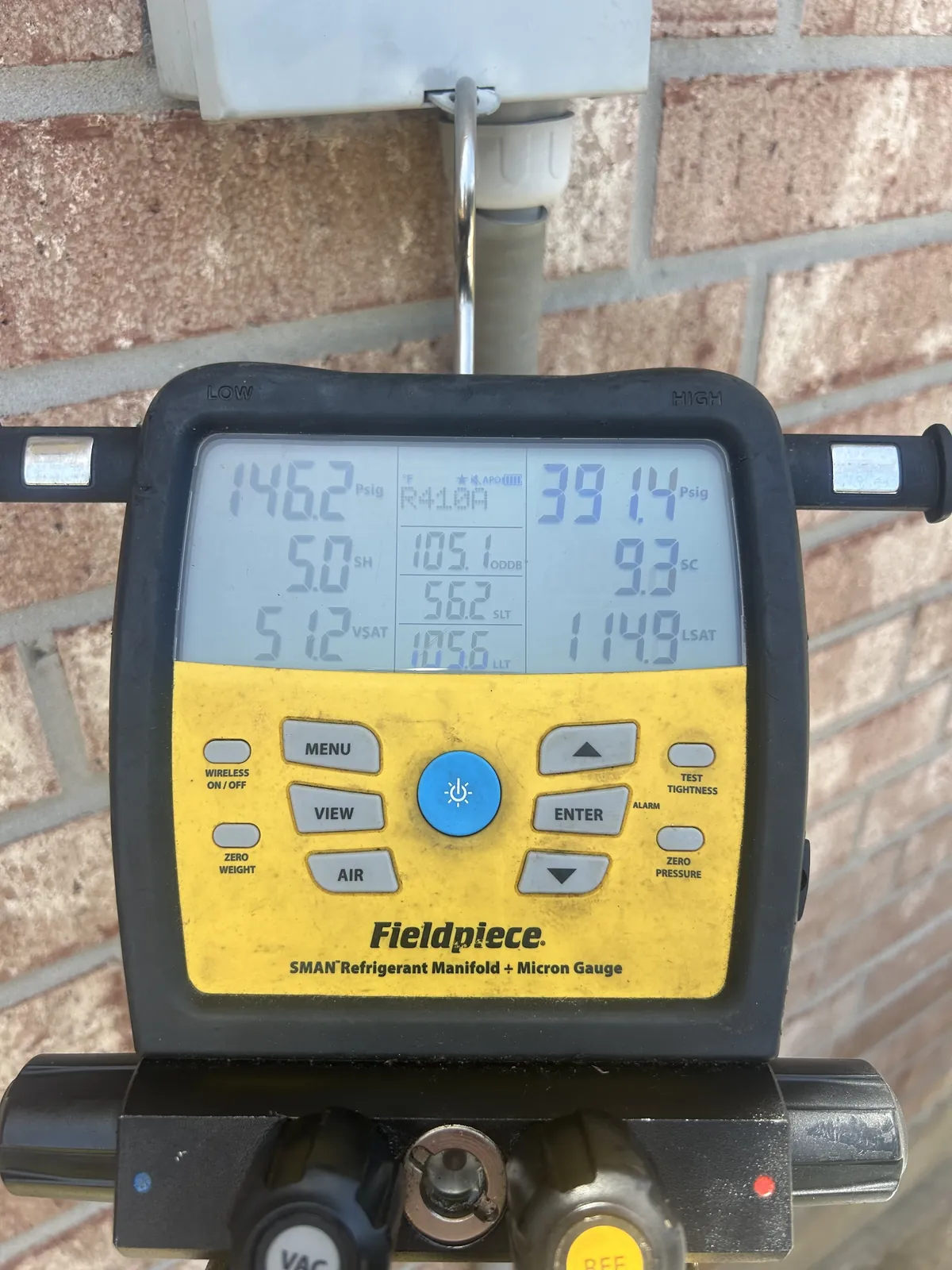
Every write-up names four things: the service, the area, the problem and the fix. That's enough for a short page or a profile post. Write-ups follow the same calendar: furnace jobs written up this winter are already on your site before next winter's peak. Here's a hypothetical example, not a real job:
Hypothetical: AC repair in Burleson. The outdoor unit hummed, but the fan wouldn't start on a hot afternoon. Replaced a failed capacitor, then checked the system's pressures before leaving.
Four rules keep this honest and safe:
- City or area only. Never a street address.
- Ask the homeowner first. No photo or page without their consent.
- Strip the location data. Phone photos can record exactly where they were taken. All ten photos TJ sent me carried GPS coordinates. Remove that data before any photo goes online.
- No identifiable faces unless the person has agreed. Crop them out if you're not sure.
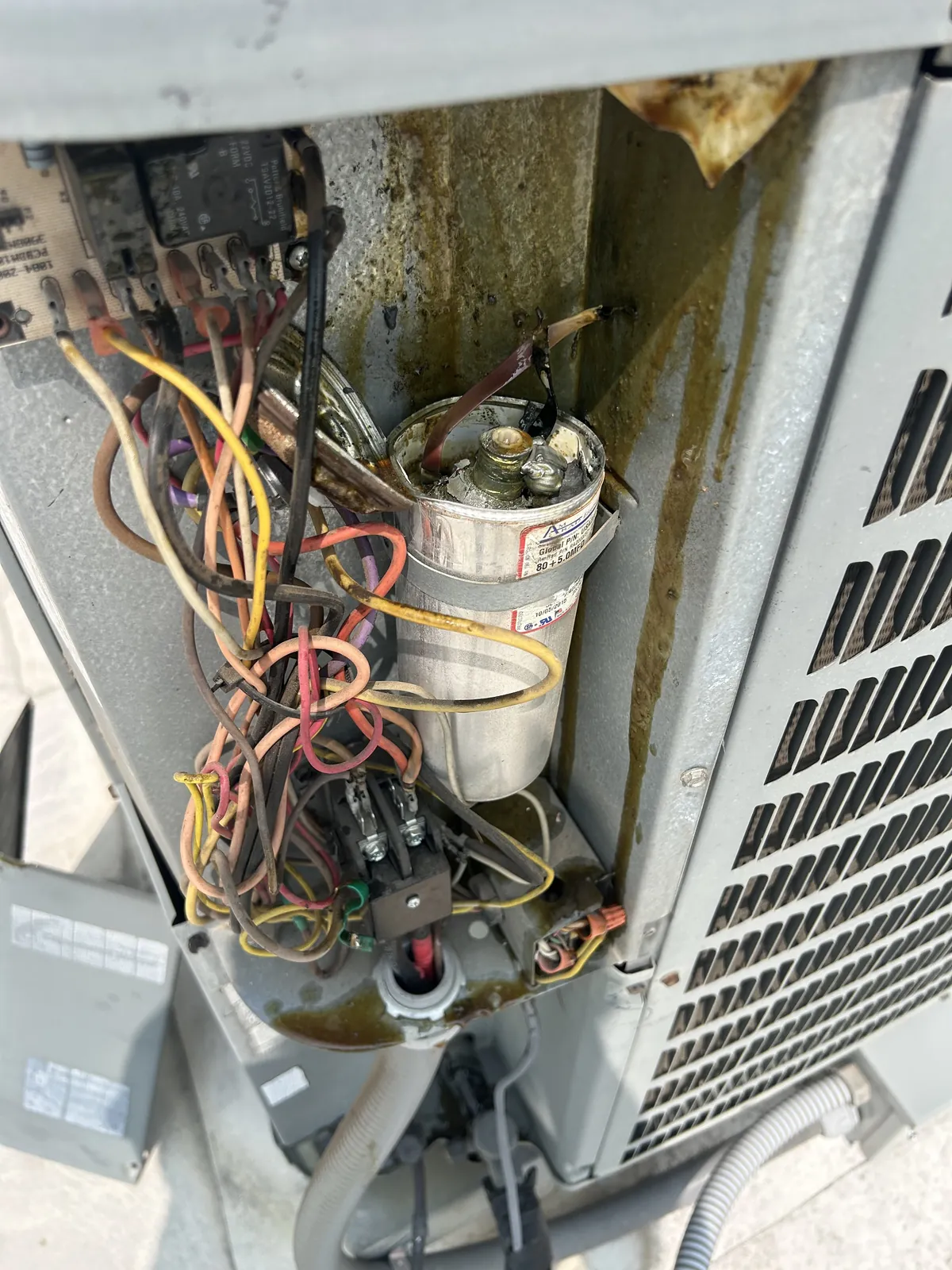
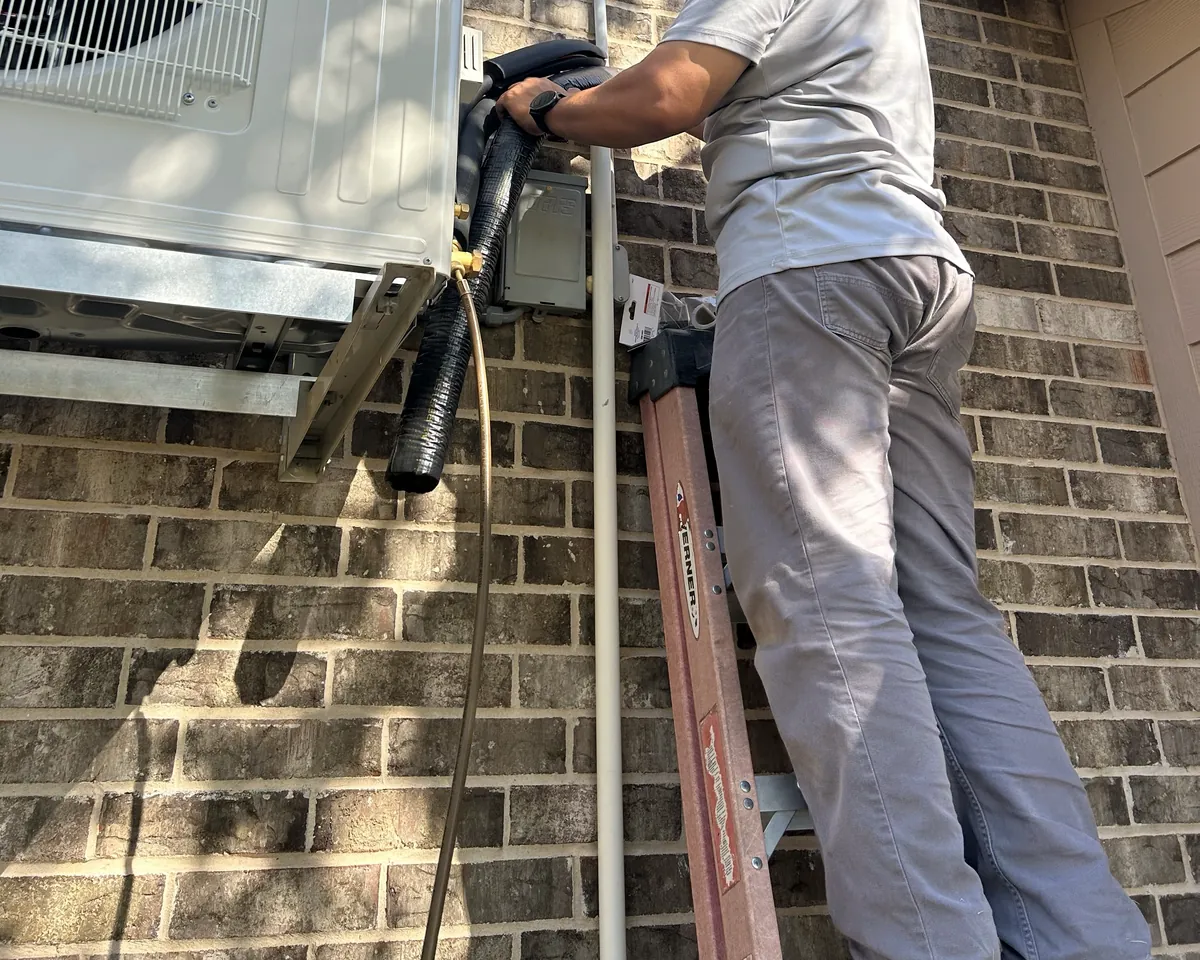
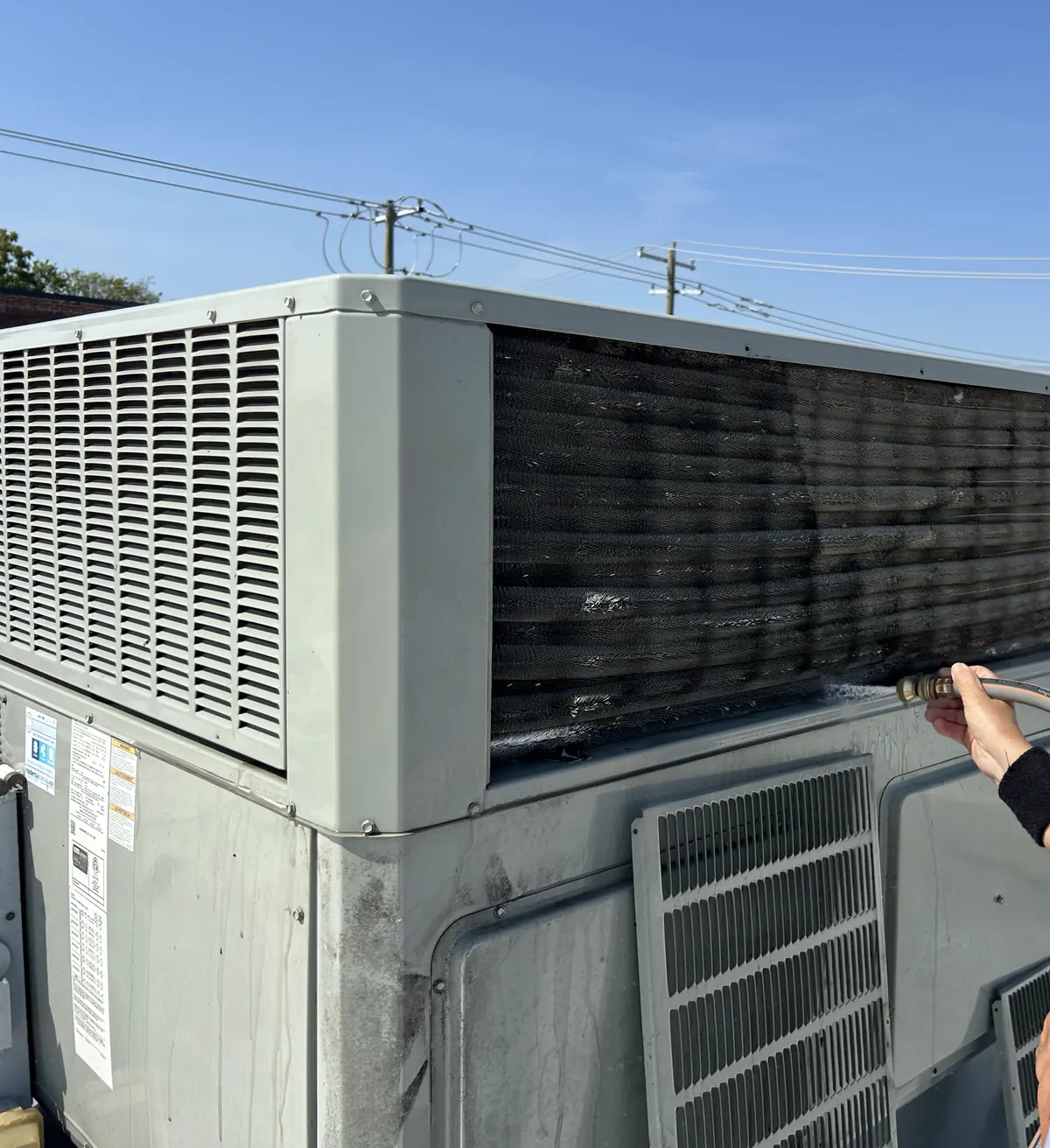
Each job write-up should link to the service page it proves. The full method is in project pages versus service pages. Builders have their own version in SEO for home builders.
What to check in Search Console, and when
Look once a month. For HVAC, compare like seasons: a summer month with last summer, not with last winter. A fall in AC searches between July and December is the weather, not a problem with your site.
If your site is new, you won't have last year to compare with yet. Compare month to month, and expect the seasons to show.
The calendar shows up here too. If heating searches start bringing impressions in early fall, your heating pages are being found before the peak.
Watch three things in the Performance report, in this order:
- Impressions. Are your service pages showing up in Google at all?
- Queries you never targeted. Searches like "furnace repair" plus your town, landing on the right page.
- Clicks. These come after impressions, not before.
I won't promise rankings or calls by any date. Nobody honest can.
Can you do this yourself?
Mostly, yes. Most SEO for HVAC companies is work an owner can do.
Do yourself:
- Set up the profile as service-area or hybrid.
- Write one page per service you sell.
- Get repair and installation pages ready before their seasons.
- Photograph jobs, strip the location data and ask homeowners for consent.
Get help with:
- Pages that Search Console says aren't indexed, when you can't tell why.
- Restructuring a site without breaking what already works.
- Reading Search Console across seasons, so you don't chase the weather.
Those are the parts where a wrong move is hardest to undo.
The next step
Set up the profile correctly, give each service its own page, time it to the seasons, and document real jobs. If you'd rather have that done with you, see my local SEO services.
Sources
Google pages fetched and checked on Oct 19, 2026.
- Google Business Profile Help: Manage your service areas
- Google Local Services Ads Help (US): screening, urgent categories and the HVAC definition
- Monthly search estimates: DataForSEO, US, September 2025 to August 2026, pulled Oct 13, 2026
- Search results for "hvac seo": DataForSEO, US, desktop, Oct 13, 2026