
The short version: Contractor SEO is the work that makes you show up when a local customer searches for your trade. It runs on three levers: a complete Google Business Profile, a site structured the way people search, and visual proof of real work. None of them is a trick. All three are measurable, and this guide shows how to measure them.
Table of contents
- What contractor SEO actually is
- Part 1: Local visibility — the Map Pack and your Business Profile
- Part 2: Site and content architecture
- Part 3: Visual proof — photography and image SEO
- The five mistakes that keep good contractors invisible
- Measuring whether any of this works
- Your first 90 days
- FAQ
What contractor SEO actually is
Google publishes the three factors that decide local rankings. In its own words: "Relevance is how well a Business Profile matches what someone is searching for." "Distance refers to how far each business is from the customer who's searching." "Prominence means how well-known a business is" (Google Business Profile Help).
That's the whole game. You can't move your shop closer to every customer, so distance is mostly fixed. Relevance and prominence are not. Relevance is built with clear services, clear pages, and clear business information. Prominence is built with reviews, links, consistent citations, and real evidence of work.
Everything in this guide feeds those two levers. And the reward for pulling them is large: by one meta-analysis of click-through studies, the top organic result earns roughly 40% of clicks, while the third position earns about a quarter of that (First Page Sage, updated Dec 2025). Visibility isn't a vanity metric. It's where the calls come from.
One more thing before the tactics. Google says plainly that it rewards "content that's created primarily for people, and not to manipulate search engine rankings" (Google Search Central). Every recommendation below passes that test. Nothing here is a trick, which is why none of it stops working after the next algorithm update.
Part 1: Local visibility — the Map Pack and your Business Profile
The point: the Map Pack — the map with three businesses under it — is where local buying decisions start, and your Google Business Profile largely decides whether you're in it.
The behavior behind this is well measured. In BrightLocal's July 2026 consumer research, 52% of consumers started their most recent local business search on Google Search, and another 9% started on Google Maps. Over the whole journey, 71% used Google Search at some point (BrightLocal, 2026). When those searches have local intent, the Map Pack sits above the traditional results.
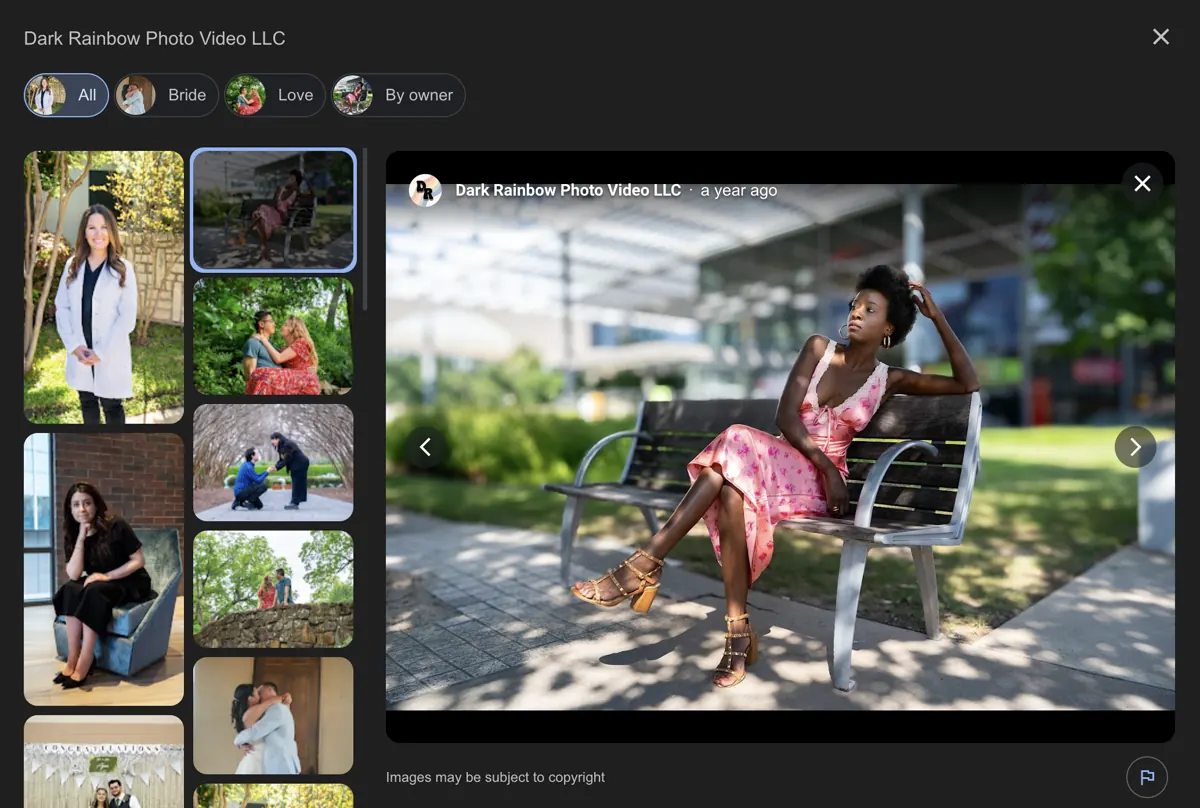
Most contractors lose the Map Pack for the same few reasons: a half-finished profile, the wrong primary category, a service area Google can't parse, thin photos, and a review count that stalled two years ago. None of those are quality problems. All of them are signal problems — and signals can be fixed.
Two deep guides on this site cover the fixes step by step:
- Map Pack DFW: why Dallas–Fort Worth home service companies miss it — the mechanism, applied to a real market.
- Google Business Profile optimization for home service businesses — the setup and maintenance checklist, in order.
Two details from Google's own guidelines are worth repeating here because almost everyone gets them wrong. First, categories: Google says to "use as few categories as possible to describe your overall core business," and a category should complete the sentence this business IS a…, not this business HAS a… (Google guidelines). A remodeler who adds every adjacent category dilutes the profile instead of expanding it.
Second, reviews are not optional prominence — they're the main prominence most contractors can actually control. Google is the most-used review platform — 83% of consumers read reviews there — and 42% trust them as much as personal recommendations (BrightLocal Local Consumer Review Survey, 2025). A steady review habit beats a review blitz every time.
From the field: when I audit DFW home-service businesses, the Business Profile is the highest-leverage fix in the first month almost every time. Not because it's magic — because it's usually half-finished, and finishing it is fast.
If local visibility is your biggest gap, that's exactly the work described on the local SEO services page.
Part 2: Site and content architecture
The point: your website's structure — which pages exist and what job each one does — matters more than any individual page's polish. Most contractor sites have three pages doing the work of six.
A contractor site that generates leads is built from six page types, each with one job:
| Page type | Its one job |
|---|---|
| Homepage | Route visitors and establish trust in seconds |
| Service pages (one per service) | Rank for "service + area" searches and convert them |
| Service-area pages | Tell Google honestly where you work |
| Project pages (one per project) | Prove the work and catch long-tail searches |
| About page | Put a face and a track record on the business |
| Contact page | Remove every excuse not to call |
The full page-by-page breakdown is in Contractor website structure: what every page needs.
The structural mistake I see most often deserves its own callout: the gallery. A "Gallery" page with sixty photos on it ranks for nothing. Sixty individual project pages — each with its own location, scope, materials, and photographs — can rank for hundreds of specific searches. Those long-tail searches convert better than the head terms you're currently losing. That argument, with the how-to, is in Project pages beat service pages.
Builders: see SEO for home builders.
Structure also has a technical layer. Google's documentation says structured data provides "explicit clues about the meaning of a page" (Google Search Central), and LocalBusiness markup can power a knowledge panel with your business details (LocalBusiness structured data). Add to that Google's advice to "write descriptive and concise text" for title tags (title links) — one unique title per page, saying what the page is. These are one-time fixes with compounding returns.
Accuracy is part of architecture too. 63% of consumers have run into inaccurate business listings, and 47% say incorrect information would send them to a competitor (SOCi, 2024). Your name, phone, and service area should match everywhere they appear — site, profile, directories. Boring work. Measurable payoff.
What an indexing fix looks like
Structure only matters if Google can read the site at all. In June 2026 a B2B software client, Taxero, had eight pages indexed and nineteen that Google refused. Almost nobody could find it by search because, for search purposes, it barely existed.
The first work was not content. It was fixing how the site rendered, canonicalized and linked, so Google could crawl it cleanly. Then the pages that already existed started to count.
| Date | Pages indexed | Not indexed |
|---|---|---|
| June 11, 2026 | 8 | 19 |
| Aug 1, 2026 | 36 | 12 |
| Sept 3, 2026 | 97 | 13 |
Weekly search impressions went from 21 in mid-June to 1,473 in the first week of September. Ninety pages now receive impressions. Clicks are still small, and that's honest — visibility comes first, then clicks, then leads. Source: Taxero's Google Search Console, Coverage and Performance exports, Sept 8, 2026.
Contractor sites fail the same way more often than people think. A builder theme, a rebuilt site, or a page-builder plugin can hide half your pages from Google without any visible sign. Check indexing before you write another word.
Part 3: Visual proof — photography and image SEO
The point: for a business that sells physical work, images are not decoration. They're evidence — and they're a ranking input most competitors ignore.
Photography doesn't rank a page directly. It drives three things that do: how long people stay, whether anyone links to or shares the page, and whether you appear in image and visual search at all. For high-ticket work, the photo often is the buying decision. I've broken down the mechanism — and what to fix first — in What bad photography costs you in search.
Then there's the technical half: filenames that describe the job, alt text written like a sentence, modern formats, compression, and lazy loading so sixty jobsite photos don't slow the page to a crawl. The complete list, in checklist form, is in Image SEO for contractors.
From the field: this is the area where my two jobs overlap. I've spent twenty years shooting commercial work, and the pattern holds: the contractors whose photos look like evidence — real jobs, real light, real detail — convert visitors the stock-photo sites never will. Video adds a dimension stills can't, which is why project videos and testimonial films are usually the next step up from a strong photo library. Video follows the same rule; I cover what to make first in the video marketing guide.
If the proof itself is your gap — the photos and video worth ranking — that's the video production side of what I do.
The five mistakes that keep good contractors invisible
The point: most contractor SEO failures aren't missing tactics — they're one of five recurring mistakes. Check yourself against this list before spending a dollar.
1. Optimizing the website while the Business Profile starves. The site gets a redesign; the profile keeps a wrong category, six photos, and a 2023 review. For local searches the profile is often what customers see first — and Google is the most-used review platform, with 83% of consumers reading reviews there (BrightLocal, 2025). Feed the surface customers actually look at.
2. One "Services" page for eight services. A single page listing everything can't be the best answer for any one search. Relevance — Google's word — is decided query by query. One real page per meaningful service, per the structure guide.
3. Chasing keywords instead of proof. Stuffing "best roofer in Dallas" into paragraphs does nothing Google hasn't seen since 2010, and it reads as spam to the homeowner. Project pages with real locations, scopes, and photographs earn the same searches honestly — and convert the click.
4. Set-and-forget. SEO decays. Reviews age, competitors publish, listings drift out of date — and 47% of consumers say wrong information would send them to a competitor (SOCi, 2024). A monthly maintenance hour beats an annual panic. That maintenance hour is most of what an SEO content strategy engagement actually is.
5. Buying promises instead of evidence. If a pitch starts with a rankings guarantee, it ends badly. Google sells ads, not rankings. Evidence-led work starts with a baseline and shows its receipts.
Measuring whether any of this works
The point: you can't manage what you don't baseline. Before changing anything, capture where you stand; after, judge every month against it.
The measurements that matter for a home service business, in order:
- Calls and form fills — the only numbers that pay invoices. Use a trackable phone link and a form that tags its source.
- Map Pack presence — search your services the way customers do (from the areas you serve, not just your office) and record who shows.
- Google Business Profile actions — calls, direction requests, and website clicks, straight from the profile's own reporting.
- Indexed pages and impressions — Google Search Console is free and shows which pages Google actually shows, for which queries.
- Review velocity — count per month, not lifetime total. Steady beats spiky.
What not to obsess over: a single keyword's daily position, traffic totals inflated by irrelevant visitors, and any dashboard number that never connects to a phone call. The plan below builds this baseline in the first two weeks.
What contractor SEO costs, and what you're paying for
I won't quote prices here. Every contractor's starting point is different, and a number without a scope is meaningless. What I can do is tell you what a real quote should contain, so you can compare two of them.
Technical fixes. Making sure Google can crawl, index and understand the site. This is one-time work with follow-up checks. If a quote skips it, ask why.
Google Business Profile work. Categories, services, photos, posts, review handling. Ongoing, and cheap to do badly.
Content. Service pages that match how customers search, project pages that prove the work, and guides like this one. Ask who writes it and where the facts come from.
Citations and links. Consistent listings in the directories that matter for your trade, and links earned from real relationships. Ask for the list.
Reporting. Search Console and analytics, read monthly, tied to leads. If reporting is a ranking screenshot, walk away.
Ask each agency to itemize a quote against those five lines. In my experience the cheapest quote is missing at least one of them.
Your first 90 days
The point: sequence beats intensity. Here's the order I'd actually work in, based on the audits I run:
| Days | Focus | Done means |
|---|---|---|
| 1–14 | Audit and baseline | You know your rankings, your profile's gaps, your site's structural holes, and your competitors' signals |
| 15–30 | Business Profile + accuracy | Profile complete per the GBP guide; name/phone/service area consistent everywhere; review habit started |
| 31–60 | Site structure | One page per real service; project pages started per the structure guide; unique titles; LocalBusiness schema |
| 61–90 | Proof and content | Photo library shot and optimized per the checklist; first project pages live; measurement against the day-1 baseline |
Three rules make the plan work. Fix what blocks Google from reading you before you create anything new. Publish proof, not filler — a project page with real photos beats five generic blog posts. And measure against your own baseline, not against a promise; anyone who guarantees rankings is selling you something Google doesn't sell.
If you'd rather have this done with you than to you, my local SEO services start with an audit, not a pitch. The two companion guides are setting up a Google Business Profile for home services and winning the DFW Map Pack.
FAQ
How long does contractor SEO take to work?
Profile and accuracy fixes can show movement in weeks. Competitive rankings for service terms are a months-long build, and the timeline depends on your market's strength. Anyone quoting a fixed timeline before seeing your baseline is guessing.
Can I do this myself or should I hire someone?
The Business Profile work in Part 1 is genuinely DIY-able — the GBP guide is written for owners. Site architecture and image work take more time than most owners have, and that's the honest tradeoff: money or hours. Either way, run the audit first so you're spending on the right gap.
Does a Google Business Profile replace a website?
No. The profile wins the map; the website wins everything else and does the convincing. 71% of consumers touch Google Search during a local business search (BrightLocal, 2026), and what they find when they click through decides whether they call. The two work as a system. Plumbers: the exact setup.
What matters most if I can only do one thing?
Finish your Google Business Profile properly — category, services, service area, photos, and a weekly review habit. It's the fastest signal-to-effort ratio in local search. Then come back for the rest.
Is SEO still worth it for contractors in 2026?
Yes, if you measure it. Customers still search before they call, and Google says AI features draw on the same fundamentals as normal results (Google's AI optimization guide). The work that earns a normal result is a complete profile, clear pages and real proof. That same work is what gets cited in an AI answer. What's changed is that thin, generic content earns nothing now. Do less, do it properly, and track it in Search Console.
Michael Carpenter runs Carpenter Growth in Dallas–Fort Worth. Twenty years producing commercial video and photography — for brands including Chewy and Higginbotham Insurance, with an office-PA crew credit on a Fuel Up to Play 60 Super Bowl commercial — now paired with evidence-led search strategy for home service businesses. About · LinkedIn