The short answer: photography doesn't rank your page directly. It drives three things that do: how people respond, who links to you, and whether you appear in image and visual search. For businesses selling something people have to see to buy, that's not a minor input.
Most SEO advice treats images as a technical problem: compress them, add alt text, use WebP, done. That's file management, not strategy. It misses what actually happens when a homeowner comparing three contractors lands on a page of dim, wide-angle phone photos.
The mechanism, honestly stated
Let's be precise, because a lot of what gets written about this is overstated.
Google publishes no "photo quality" ranking factor, and I've seen nothing suggesting an algorithm scores your composition. Its image guide does say sharp photos make more appealing result thumbnails and can draw more traffic. What exists is a chain of effects, and the chain is real:
Engagement. People who land on a page with compelling imagery stay longer and go deeper. People who land on a page that looks unprofessional leave and click the next result. Google says it uses aggregated and anonymized interaction data to assess whether results are relevant to a search. It doesn't say which behaviors count.
Links and mentions. Nobody links to a mediocre gallery. Publications, local blogs, suppliers, and design roundups link to work that looks good. Google says links and references from other prominent sites are one way it judges quality. For visual businesses, imagery is what earns them.
Image search and visual surfaces. Google Images, Google Lens, Pinterest, and increasingly AI assistants that surface visual results. A well-shot, properly labeled photo of a finished project is discoverable in ways text is not. Home improvement is one of the most image-driven search categories.
Conversion, which isn't SEO but is the point. Ranking first and converting nobody is a worse outcome than ranking third and closing. Imagery does more work here than any other element on a portfolio page.
Where the technical and the visual meet
The technical checklist still matters. It just isn't sufficient.
Filenames. PXL_20260614_183022.jpg tells Google nothing useful. outdoor-kitchen-stone-island-southlake.jpg tells it what the photo shows. Google calls file names "very light clues", so this is a small signal. It's also free and almost universally skipped.
Alt text. Describe what's in the image, accurately, in natural language. Not a keyword dump. Alt text serves accessibility first; search benefit follows from doing it honestly. Google says it uses alt text, with computer vision and the page's content, to understand what an image shows.
Dimensions and format. Explicit width and height prevent layout shift, which is a Core Web Vitals input. WebP or AVIF over JPEG. Responsive sizes so phones aren't downloading desktop-resolution files.
Lazy loading below the fold, but never on your hero image — that's your Largest Contentful Paint element and lazy-loading it actively hurts you.
Structured data. ImageObject markup where appropriate, and images referenced in your Article or Product schema.
Sitemap. Images can be included in your XML sitemap. Most sites don't bother.
Do all of that with bad photographs and you have a technically excellent presentation of work that doesn't look worth buying.
The part nobody wants to hear
For high-ticket visual businesses, the photography is the product page. Not an illustration of it.
A homeowner deciding between three pool builders is not reading your services copy closely. They're looking at your work and asking one question: does this look like what I want in my backyard?
If your images are shot at midday with harsh shadows, or at 3pm from a phone at chest height, or with the neighbor's fence and a garden hose in frame, you've answered that question badly regardless of how good the actual construction was.
This is a strange thing to lose on, because the underlying work is usually excellent. The gap is documentation, not craftsmanship. If you build homes, SEO for home builders covers project pages, your Business Profile and the rest of builder search.
What separates professional documentation from a phone photo
Not the camera. Three things:
Time of day. The hour after sunrise and before sunset. Pools, outdoor kitchens, and architecture look completely different in warm low-angle light versus overhead noon sun. This alone accounts for most of the visible difference.
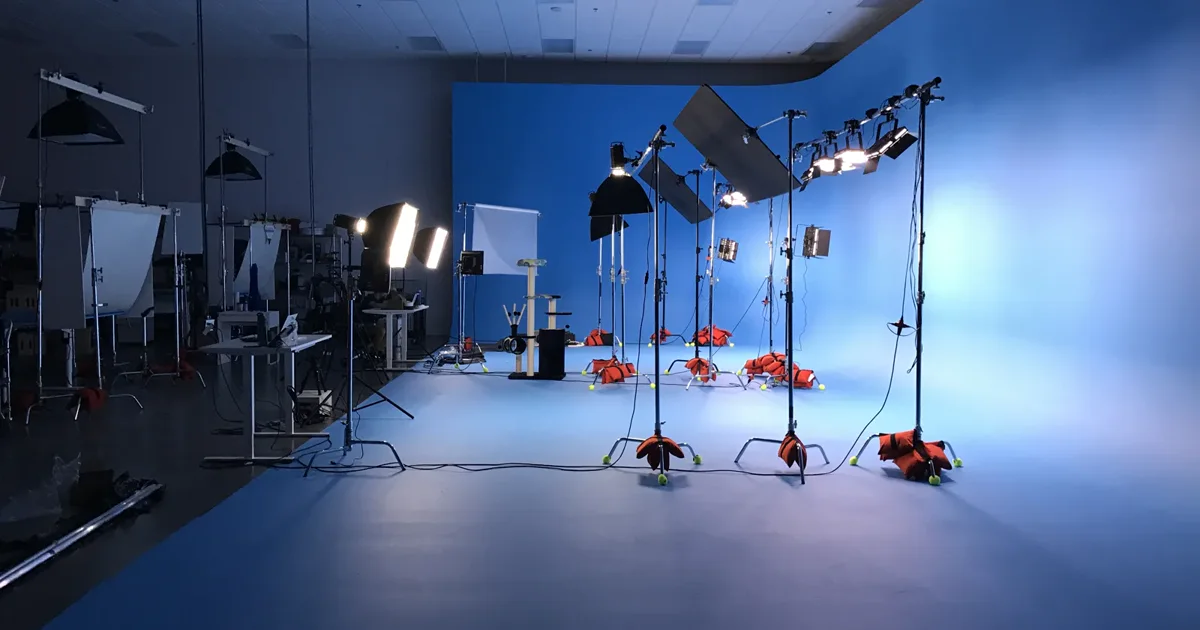
Staging. Hoses coiled, furniture placed, lights on, water clean, equipment out of frame. Ten minutes of preparation changes the result more than any equipment upgrade.
Coverage. Wide establishing shot, mid shots of features, tight details on materials and finishes. One angle isn't documentation. And for search purposes, more good images means more entry points.
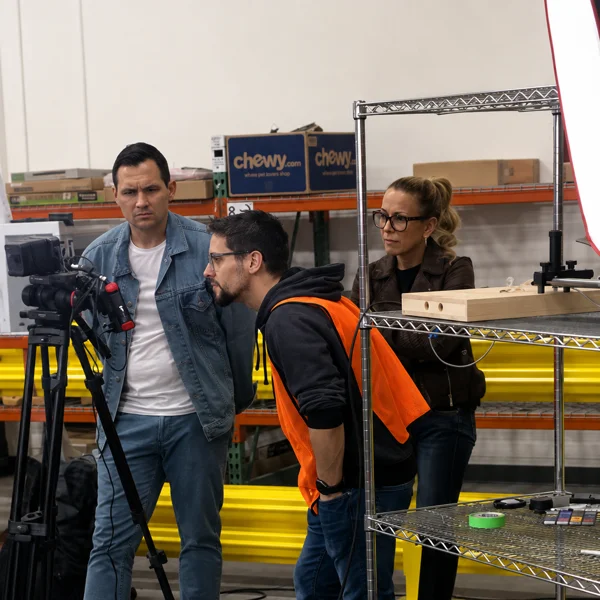
Video adds a dimension stills can't: scale and flow. Walking through a space communicates size in a way a photograph never does, and video keeps people on a page longer, which feeds back into the engagement chain. I shoot walkthroughs of finished projects as part of my video production around Dallas–Fort Worth.
Where AI search changes the calculation
This is worth watching. As more discovery moves through AI assistants that can process images, well-documented visual work becomes newly valuable — a properly labeled, well-shot project image is a better candidate for citation and surfacing than a stock photo.
Nobody should rebuild their strategy around this yet. But businesses that already document their work properly are positioned for it by accident, and businesses that don't are accumulating a gap.
What to fix, in order
For a walkthrough video, start with budgeting for production before you call anyone.
- Reshoot your top ten projects properly. Golden hour, staged, multiple angles. This is the one that matters.
- Rename every file descriptively.
- Write real alt text on every image.
- Convert to WebP and set dimensions. Lazy-load below the fold.
- Break the gallery into project pages.
- Add one walkthrough video for your best project.
Steps 2 through 4 are an afternoon. Step 1 is the one that matters and the one most businesses never do.
The honest summary
Photography won't outrank a competitor with better content architecture and a stronger link profile. It's not a substitute for the fundamentals.
But among businesses with comparable fundamentals — which describes most local markets — visual quality is often the difference in what gets linked, what gets shared, what gets clicked from image results, and what actually closes.
For a category where customers are buying something they can only evaluate by looking at it, that's not a detail.
Michael Carpenter is a DFW-based videographer and photographer who works on search strategy for high-ticket businesses. Carpenter Growth produces the visual work as well as the strategy — start a conversation.
This note is part of the broader Contractor SEO: The Complete Guide.
For the technical image implementation behind that visual work, read Image SEO for Contractors: The Complete Checklist.